


Introduction
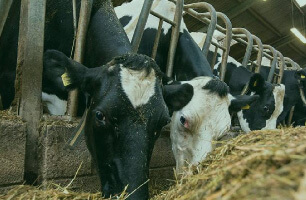
The livestock and dairy sector in Pakistan plays a vital role in shaping the national economy. Punjab, being the country’s largest province, is the backbone of this sector, contributing the highest share in milk, meat, and other dairy products. With its vast farmland, modern techniques, and value-added initiatives, Punjab not only meets local demand but also exports to international markets, generating around 13% of Pakistan’s total foreign exchange.
In this blog, we will explore the importance of livestock and dairy in Punjab, key facts, challenges, and most importantly, investment opportunities that can reshape Pakistan’s agricultural and food economy.

Importance of Livestock & Dairy in Pakistan’s Economy
Livestock is one of the baseline sectors of Pakistan’s economy, contributing over 62% to the agriculture GDP. Overall, it represents 14.04% of Pakistan’s national GDP and accounts for 8–10% of agriculture-related exports.
Punjab leads this growth with over 70,000 acres of livestock and dairy farms, becoming the hub of milk and meat production. Around 40 million people in Punjab are directly or indirectly engaged in raising livestock, providing employment to more than 8 million rural families.
👉 For more agriculture-related programs, visit our Agriculture Schemes section.
Key Facts about Livestock & Dairy in Punjab
- Pakistan is the 4th largest milk producer in the world.
- Punjab contributes 57% to the national livestock sector.
- The annual production of milk in Pakistan crossed 65.7 million tons in 2021–22.
- More than 83% of small farmers raise over 50% of milk animals.
- Only 3% of milk production is processed for value addition, highlighting huge potential for exports.
- The Halal Meat Industry in Pakistan contributes to 16% of the total global Halal meat trade.
Dairy Sector Structure in Pakistan
The dairy sector in Pakistan is mainly dominated by small-scale farmers:
- Small Farmers (83%) – Herd size less than 5 animals; produce over 50% of milk.
- Medium Farmers (14%) – Herd size 5–10 animals; contribute 29% of milk.
- Large Farmers (3%) – Herd size above 10 animals; produce 21% of milk.
Despite being the 4th largest milk producer globally, only a small fraction is processed into pasteurized milk, cheese, butter, yogurt, and milk powders. This leaves a huge margin for investment in dairy processing and packaging industries.
Growth of Halal Meat Industry
Pakistan has emerged as a significant player in the Halal meat market, ranking 18th in the world with an annual production of 2.2 million tons. The country holds a 2.9% share in global Halal meat output, with beef and buffalo meat production doubling from 903,000 tons in 2001 to 1.82 million tons in 2020.
This consistent growth is supported by increasing demand in Middle Eastern, Central Asian, and regional markets, making Pakistan a strategic exporter of Halal-certified meat.
Investment Opportunities in Livestock & Dairy
The livestock and dairy sector in Punjab is full of value chain investment opportunities. Here are some of the most promising areas:
1. Corporate Dairy Farming
Large-scale farms can serve as reliable sources for milk supply and animal breeding. Crossbred cattle with high milk yields can be commercialized through organized dairy farming.
2. Milk Collection Centers & Supply Chains
Establishing collection centers in milk-producing areas with chillers ensures fresh supply and creates opportunities for value-added products like flavored milk, condensed milk, yogurt, and cheese.
3. Animal Vaccine Production
Diseases like Foot and Mouth Disease (FMD) remain a challenge. Local vaccine production facilities offer investment potential to make vaccines affordable for farmers.
4. Animal Feed Manufacturing
Currently, the cattle feed industry caters to less than 5% of balanced feed requirements. With rising demand, feed production units for dairy, beef, and mutton animals can generate strong returns.
5. Silage & Hay-Making
More than 58 companies are currently producing silage, but supply still falls short. This sector is ideal for private investors to fill the gap.
6. Diversification of Dairy Products
With the growing fast-food and bakery industry in Pakistan, the demand for cheese, butter, and yogurt has skyrocketed. Investment in dairy product diversification can tap into both local and export markets.
7. Feed-Lot Fattening for Beef & Mutton
Traditional methods won’t meet future meat demands. Feed-lot fattening ensures higher yield and better quality for both domestic consumption and export.
8. Modern Abattoirs & Meat Processing Units
Pakistan’s slaughterhouses require modernization. Establishing commercial slaughterhouses with grading systems and meat processing facilities will enhance meat exports.
9. By-Products Processing Units
By-products like hides, bones, and blood can be processed into fertilizers, gelatin, and pet food, creating a profitable side-industry.
10. Integrated Poultry Production
Future poultry growth depends on vertically integrated units combining farming, processing, and value-added ready-to-cook products.
Challenges Facing the Sector
Despite its strong potential, the livestock and dairy sector in Punjab faces several challenges:
- Lack of modern processing and packaging facilities.
- Limited access to quality vaccines and veterinary services.
- Poor supply chain management and cold storage facilities.
- Low investment in research and development.
- High feed costs and limited local production.
Addressing these challenges through public-private partnerships can unlock the sector’s true potential.
Internal Links
- Read about the E-Taxi Green Mobility Project in Punjab.
- Explore CM Punjab T-Cash Card for smart transport solutions.
- Check out Upcoming Government Schemes in Pakistan.
External Links
- Pakistan Bureau of Statistics – Agriculture
- Food and Agriculture Organization (FAO)
- Punjab Livestock & Dairy Development Department
Conclusion
The livestock and dairy sector in Punjab stands as a cornerstone of Pakistan’s agricultural economy. With massive contributions to GDP, employment generation, and exports, this sector has immense potential for both local growth and international trade.
From dairy product diversification to Halal meat exports, Punjab offers limitless opportunities for investors and entrepreneurs. With the right policies, infrastructure, and investment, Pakistan can transform into a global leader in livestock and dairy production.