

Introduction
Punjab is blessed with a diverse range of minerals and natural resources, making it one of the most resource-rich regions of Pakistan. From the world’s largest rock salt deposits in the Salt Range to high-potential reserves of iron, coal, gypsum, and clays, Punjab’s mineral wealth plays a vital role in powering industries and supporting economic development.
Currently, around 20 different minerals are being excavated by nearly 2,300 enterprises, including 57 industrial leases operated by major corporations and multinationals. These minerals fuel production in cement, soda ash, ceramics, fertilizer, glass, and coal-based industries.
With increasing demand for steel, cement, and industrial inputs, the Mines & Minerals sector of Punjab offers vast opportunities for investment, modernization, and import substitution.
Key Facts about Mines & Minerals in Punjab

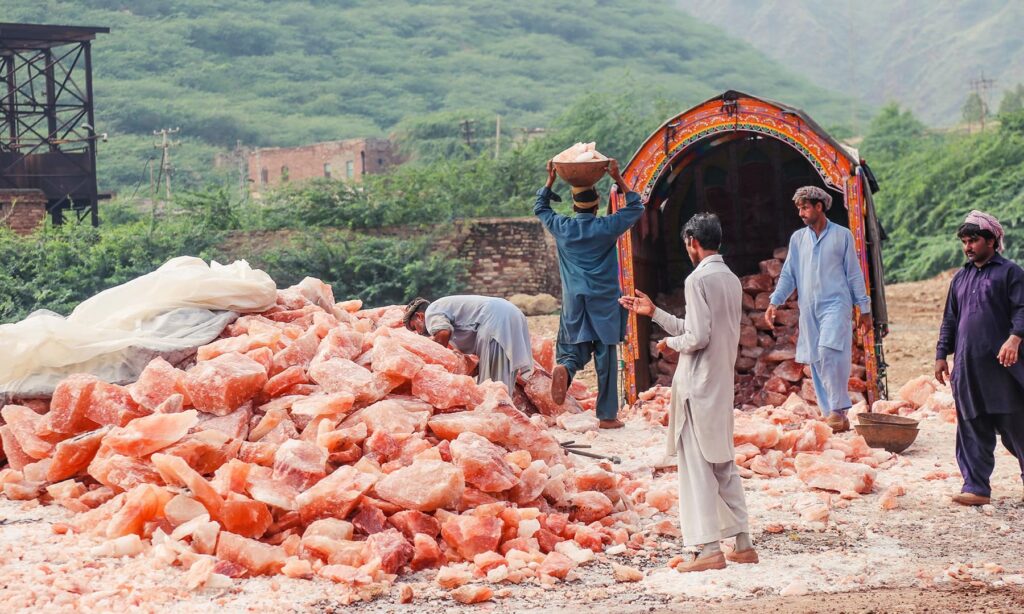
- Punjab hosts the world’s largest rock salt deposits in the Salt Range.
- The province introduced its first-ever Mineral Policy in 2018, creating a transparent and investor-friendly framework.
- Estimated resources include:
- ~250 million tons of iron ore
- 511 million tons of coal
- Specific zones have been delineated for cement plant installations, opening doors for industrial expansion.
- Punjab contributes heavily to the national industrial base by supplying raw material for cement, steel, ceramics, and fertilizer industries.
👉 Learn more about Livestock & Dairy investment opportunities in Punjab.
Major Minerals of Punjab
The northern and southern regions of Punjab are rich in:
- Iron ore
- Gold
- Radioactive minerals
- Rock phosphates
- Coal (Makarwal & Salt Range)
- Gypsum
- Rock salt
- Laterite and bauxite
- Sandstone & millstone
- Different types of clays
These minerals provide a strong resource base for Punjab’s industrial sector, reducing dependency on imports and ensuring a steady supply of raw materials for both local industries and export markets.
Growing Demand for Iron & Steel
Pakistan has an average annual demand of 9 million tons of iron and steel. However, the country remains largely dependent on imports. With the iron and steel industry growing at a CAGR of 15%, establishing local mining and processing facilities is critical.
This not only helps reduce reliance on imported steel but also ensures indigenous resource utilization. Encouraging private sector investment in this space can transform Pakistan into a more self-reliant economy.
👉 Check out Government Schemes in Pakistan for updates on industrial and infrastructure projects.
Chiniot Iron Ore Project – A Game Changer


One of Punjab’s most ambitious initiatives is the Chiniot Iron Ore Project. Managed by the Punjab Mineral Company (PMC), this project is Pakistan’s first large-scale Iron Ore Mining & Processing venture.
Key Highlights of the Chiniot Project:
- Resource Estimation: 250 million tons of iron ore with high magnetite (80%) and hematite (20%) content.
- Copper Reserves: 31 million tons estimated.
- Steel Production Capacity: 1 million tons per annum.
- Economics: IRR > 20% with payback in just 9 years.
- Project Life: 40+ years.
- Capex Requirement: US $1.3 billion.
- Technology: Modern mining with UG Cut & Fill method, conventional processing, and Corex smelting unit.
The project is supported by globally renowned consultants, including GEO-RC (Germany), BAW (Canada), John Arthur (UK), and laboratories like SGS (Switzerland) and ACME Labs (Canada).
Once fully operational, the Chiniot Iron Ore Project will be sufficient to meet the requirements of a large-scale steel mill complex, drastically reducing the need for steel imports.
Opportunities for Investors
The Mines & Minerals sector in Punjab presents lucrative opportunities across different stages of the value chain:
- Iron & Steel Industry
- Development of integrated steel mills.
- Iron ore beneficiation plants.
- Copper extraction and processing units.
- Cement Industry
- Cement plants in newly delineated zones.
- Utilization of limestone and gypsum deposits.
- Coal-Based Industries
- Power plants utilizing local coal reserves.
- Expansion of cement and brick kiln industries.
- Salt & Gypsum Products
- Production of pharmaceuticals, fertilizers, and chemical by-products.
- Export potential of Himalayan pink salt and refined gypsum.
- Ceramics & Glass
- Use of silica sand, clay, and limestone for ceramics and glass industries.
- Establishment of specialized industrial clusters.
Challenges in the Sector
Despite its potential, the sector faces challenges:
- Lack of modern mining technology.
- Environmental concerns regarding unregulated excavation.
- Dependence on imported steel and industrial minerals.
- Need for skilled workforce and technical training.
- Limited investment in R&D for mineral exploration.
The Government of Punjab, through the Mineral Policy 2018, is addressing these gaps by ensuring transparent licensing, encouraging private sector participation, and offering incentives for investors.
👉 Learn more about Punjab’s E-Taxi Green Mobility Initiative, another innovative government project.
Internal Links
External Links
- Punjab Mineral Company (PMC)
- Pakistan Bureau of Statistics – Mining Sector
- Geological Survey of Pakistan
Conclusion
The Mines & Minerals sector in Punjab holds the key to Pakistan’s industrial and economic future. From iron ore and coal to salt and gypsum, Punjab’s mineral resources provide a solid foundation for industrial growth, job creation, and foreign exchange earnings.
With projects like the Chiniot Iron Ore initiative, the province is set to reduce dependence on imports, promote local industries, and open new avenues for domestic and international investors.
By adopting modern technologies, sustainable practices, and strategic partnerships, Punjab can unlock the full potential of its mineral wealth, contributing significantly to Pakistan’s long-term economic stability.